Acne is a condition that affects many teenagers and adults, and it has a direct impact on self-confidence and quality of life.
Recent studies show that acne affects about 9.4% of the global population, placing it eighth on the list of the most common diseases worldwide.
In some countries, the rate of active acne among people aged 16 to 24 reaches over 20%.
What causes acne, how common is it, and what are the most effective ways to treat it?
What causes acne?
Excess sebum secretion from the sebaceous glands, combined with dead skin cells, leads to clogging of the hair follicles. The oily secretions accumulate beneath the blocked pore and create an ideal environment for the proliferation of the acne-causing bacterium Cutibacterium acnes. A subsequent inflammatory response develops in the follicle, resulting in the familiar acne lesion.
Common treatments
Topical treatments
There is a wide variety of topical preparations applied directly to the skin:
• Topical retinoids such as adapalene and tretinoin, which improve cell turnover and prevent blockage of hair follicles. They are recommended as a first-line treatment for comedonal acne and for mild to moderate inflammatory acne.
• Benzoyl peroxide, salicylic acid, keratolytic agents and anti-inflammatory ingredients.
Alongside pharmaceutical treatments, several very effective technologies exist for managing acne. In many cases, they can reduce the need for applying and using strong medications that may sometimes cause skin irritation.
This is where technologies such as blue-filter IPL, Nd:YAG 1064 nm laser and medical phototherapy with the Dermalux device come into play.
Light- and laser-based acne treatments
Cutibacterium acnes produces porphyrins, which are molecules that are highly sensitive to blue light.
When the bacteria are exposed to this wavelength, reactive oxygen species are generated that damage the bacterial cell wall and lead to bacterial death. At the same time, red and infrared light can reduce inflammation in the skin and decrease sebaceous gland activity over the longer term.
Below we will review three main technological methods for acne treatment:
• Blue-light IPL
• Nd:YAG 1064 nm laser
• Photodynamic-style LED treatment with Dermalux
Acne treatment with Nd:YAG laser using Xlase Plus
Nd:YAG laser at a wavelength of 1064 nm acts at a completely different depth compared to blue light.
This wavelength penetrates several millimetres into the dermis, where the sebaceous glands and the blood vessels that supply the hair follicles are located. Part of the laser energy is absorbed by haemoglobin and part by water, creating controlled heating of the inflamed area and of the sebaceous gland itself. In this way, the treatment reduces sebum production in the long term and lowers inflammation.
Clinical findings report a significant decrease in the number of inflammatory lesions in mild to severe acne, and in some cases improvement is maintained for months after completing a series of treatments. An additional important advantage is the good safety profile even in darker skin types, thanks to the relatively low absorption of this wavelength in melanin.
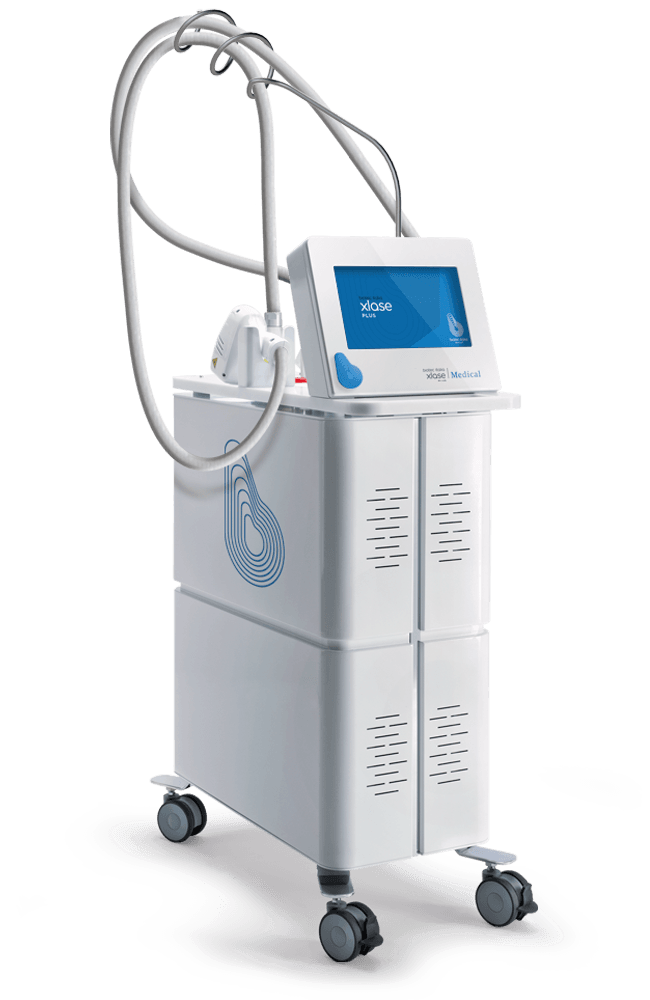
The Xlase Plus platform by Biotec Italia integrates a powerful Nd:YAG module as part of its treatment solutions and allows precise parameter adjustment according to skin type and lesion depth. This makes it possible to target thermal energy at the sebaceous glands to reduce sebum production, treat inflammation and even encourage improvement in superficial acne scars – all in a limited number of sessions.
Acne treatment with Dermalux
Dermalux is a medical LED treatment system based on three different wavelengths, each acting on different layers of the skin and on different mechanisms involved in acne.
• Blue light acts directly on Cutibacterium acnes and significantly reduces the bacterial load within the hair follicle, which lowers the number of pimples and inflammatory lesions.
• Red light penetrates deeper and affects inflammatory processes, helping to calm redness and improve skin texture.
• Infrared light supports tissue healing and collagen regeneration.
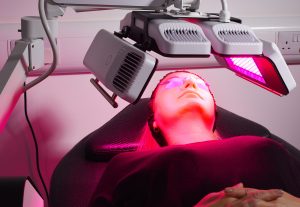
Clinical studies report that blue and red LED treatments can reduce the number of inflammatory lesions by 50–70% after a treatment series spanning several weeks, with an excellent safety profile and no downtime.
The Dermalux mechanism of action enables acne treatment even in sensitive skin and even after other aggressive procedures, when the goal is to calm the skin and reduce the risk of new flare-ups.
Acne treatment with IPL 410 nm using Xlase Plus
Advanced IPL platforms such as Xlase Plus use a powerful light source filtered through specific cut-off filters to achieve the desired wavelength range. In acne, a filter in the 410–420 nm range is used to target acne bacteria directly, while also affecting other chromophores in the tissue.
Laboratory studies have shown that IPL treatment reduces bacterial counts and lowers levels of inflammatory cytokines such as TNF-alpha, leading to clinical improvement in inflammatory acne.
Clinical studies in humans have found that IPL use in patients with mild to moderate acne can lead to a 70–80% reduction in inflammatory and non-inflammatory lesions after a relatively short treatment series.
Summary
There are many effective medical treatments for acne, but in today’s era, technology-based treatments can often be easier and quicker.
Dermalux offers a treatment that targets the bacteria, the inflammation and the skin-healing processes.
The Xlase Plus platform adds another advanced treatment layer through Nd:YAG and 410 nm IPL to reduce bacterial load and inflammation in a controlled manner.
A smart combination of these methods, alongside a personalised protocol led by a dermatologist, can provide a precise and faster response for mild, moderate and severe acne – and help reduce the long-term risk of scarring.